

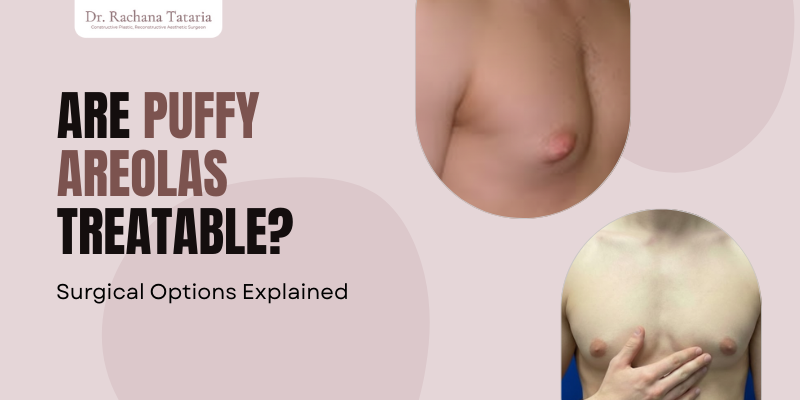
Puffy areolas are a common cosmetic concern for both men and women. While they do not indicate a medical problem, many individuals feel self-conscious and look for ways to correct them.
If you’re considering puffy areola correction, researching breast surgery in Mulund, or consulting a plastic surgeon in Mumbai, this guide will help you understand the causes and available treatment options.
What Causes Puffy Areolas?
Several factors can make the areola look puffed or protruded. Knowing the underlying reason is essential for choosing the right correction method.
1. Genetics
Some people naturally have more glandular tissue beneath the areola, causing it to project outward. This usually becomes noticeable during puberty.
2. Hormonal Changes
Hormonal fluctuations during puberty, pregnancy, and breastfeeding can cause the areola to enlarge and protrude. In some individuals, these changes remain even after hormones stabilize.
3. Gynecomastia in Men
Men with gynecomastia develop excess glandular tissue behind the nipple–areola complex, leading to persistent puffiness that does not improve with exercise or diet.
4. Fat Accumulation
Excess fat beneath the areola can add fullness, contributing to a puffy appearance. This may happen with weight gain or overall increased body fat.
5. Skin Laxity
Aging, weight loss, or pregnancy can stretch the skin around the breast. With weaker support, the areola may appear more prominent or fuller.
Surgical Options for Puffy Areola Correction
Modern cosmetic procedures offer effective, long-term solutions for puffy areolas. Surgeons performing cosmetic surgery in Mulund or areola correction in Mumbai may use one or a combination of the following techniques:
1. Areola Reduction Surgery
This procedure reduces the size and diameter of the areola, especially when it is both enlarged and puffy.
Benefits:
Creates a more proportionate appearance
Addresses the spreading or stretching of the areola
Results in discreet scarring along the areola border
2. Glandular Tissue Removal
If excess glandular tissue is the main cause of puffiness, the surgeon removes or reshapes it from behind the areola.
Benefits:
Flattens the areola effectively
Works well for genetically puffy areolas
Provides long-lasting results with minimal scarring
3. Nipple–Areola Complex Reshaping
This technique is useful when both the nipple and areola require contouring. It improves symmetry, size, and overall appearance.
4. Gynecomastia Surgery for Men
Men with puffy areolas due to gynecomastia benefit from gland removal, often paired with liposuction.
Benefits:
Flattens the chest
Eliminates puffiness caused by deep tissue
Restores a natural masculine contour
Recovery and Expected Results
Most patients resume daily activities within a few days. Incisions are usually placed at the areola border, making scars naturally less visible.
As swelling decreases, the areola becomes flatter, more symmetrical, and more aesthetically balanced. Results are typically long-lasting, especially when glandular tissue is removed.
What causes puffy areolas?
Puffy areolas are commonly caused by genetics, hormone changes, excess glandular tissue, fat deposits, or loose skin. In men, gynecomastia is a frequent reason. These conditions create outward pressure, resulting in a rounded or protruded appearance.
How is puffy areola surgery performed?
The procedure usually involves removing or reducing glandular tissue, tightening the surrounding skin, and, if needed, reducing the areola’s diameter. A small incision is placed around the areola, allowing for minimal visible scarring. The approach varies depending on the individual’s anatomy and goals.
Final Thoughts
Puffy areolas are fully treatable with safe, advanced surgical options. Whether you need puffy areola correction, nipple surgery, or a consultation with a plastic surgeon in Mumbai or a cosmetic surgeon in Mulund, personalized treatment can help you achieve natural, symmetrical, long-lasting results.